

For Immediate Release
U.S. Poultry & Egg Association
Tucker, GA - February 25, 2026
Print / Save PDF
Contact:
Hannah Keck, 678.514.1979, hkeck@uspoultry.org
Current Poultry Research and Findings Presented at 2026 IPPE; Now Available Online
During the 2026 International Production & Processing Expo (IPPE), four researchers presented their findings from recently completed research projects funded by the U.S. Poultry & Egg Association (USPOULTRY) and its Foundation as part of the TECHTalks sessions offered during the Expo. All the researchers’ presentations have been made available on USPOULTRY’s YouTube channel and can be viewed here.
Dr. Martha Pulido Landinez, associate clinical professor of avian medicine in the Poultry Research and Diagnostic Laboratory at Mississippi State University, presented her research findings from the study, “Control of Enterococcus cecorum Through Identifying Its Dynamics of Adaptation to the Chickens and Its Environment.” This study examined how harmful strains of Enterococcus cecorum (E. cecorum) emerge, spread and survive in poultry and poultry environments. The research found that Enterococcus faecalis mainly affects embryos and very young chicks, while E. cecorum causes serious disease in older broilers, including bone, joint and bloodstream infections. Disease-causing strains were linked to a specific genetic marker and were able to survive for long periods in poultry facilities, especially in reused litter and dirty conditions, highlighting the importance of improved sanitation and management.
As part of his research findings from the study, “Identification of Early Indicators of Necrotic enteritis Disease in Broiler Chickens,” Dr. Ravi Kulkarni, associate professor of population health and pathobiology at North Carolina State University, explained how he and other researchers explored whether gases released from manure and air could serve as early warning signs of necrotic enteritis (NE) in broiler chickens. The team identified two specific odor-related compounds in manure that were consistently higher in birds with NE compared to healthy birds. These findings suggest that, with further validation, low-cost monitoring tools could help poultry producers detect the disease earlier and respond more quickly.
Dr. Issmat Kassem, assistant professor, Department of Food Science and Technology, University of Georgia, investigated why some Campylobacter bacteria survive poultry processing despite antimicrobial treatments and presented his findings from his project, “Detection and Control of Processing-Tolerant Campylobacter on Broiler Carcasses.” The research found that certain Campylobacter strains can tolerate commonly used processing antimicrobials, such as peroxyacetic acid and chlorine. Identifying these hard-to-kill strains highlights the need for alternative or additional control methods to improve food safety and reduce reliance on conventional antimicrobials.
Dr. Orhan Sahin, associate professor at the Veterinary Diagnostic Laboratory at Iowa State University, discussed a study titled, “Development of Vaccines for the Control of Chicken Spotty Liver Disease.” The study evaluated how well a vaccine could protect chickens from Spotty Liver Disease. Results showed that more than 80% of birds were protected with a single vaccination, and 90+% were protected with two doses. Vaccinated birds also developed strong immune responses and were protected against multiple bacterial strains, supporting continued development of a commercial vaccine to improve bird health and the sustainability of egg production.
About USPOULTRY
U.S. Poultry & Egg Association (USPOULTRY) is the All Feather Association progressively serving its poultry and egg members through research, education, communications and technical services.Founded in 1947, USPOULTRY is based in Tucker, Georgia.
About USPOULTRY Foundation
The USPOULTRY Foundation's mission is to support the recruitment and training of the brightest students, seek and fund scientific research, foster student scientists and promote careers in the poultry and egg industry.
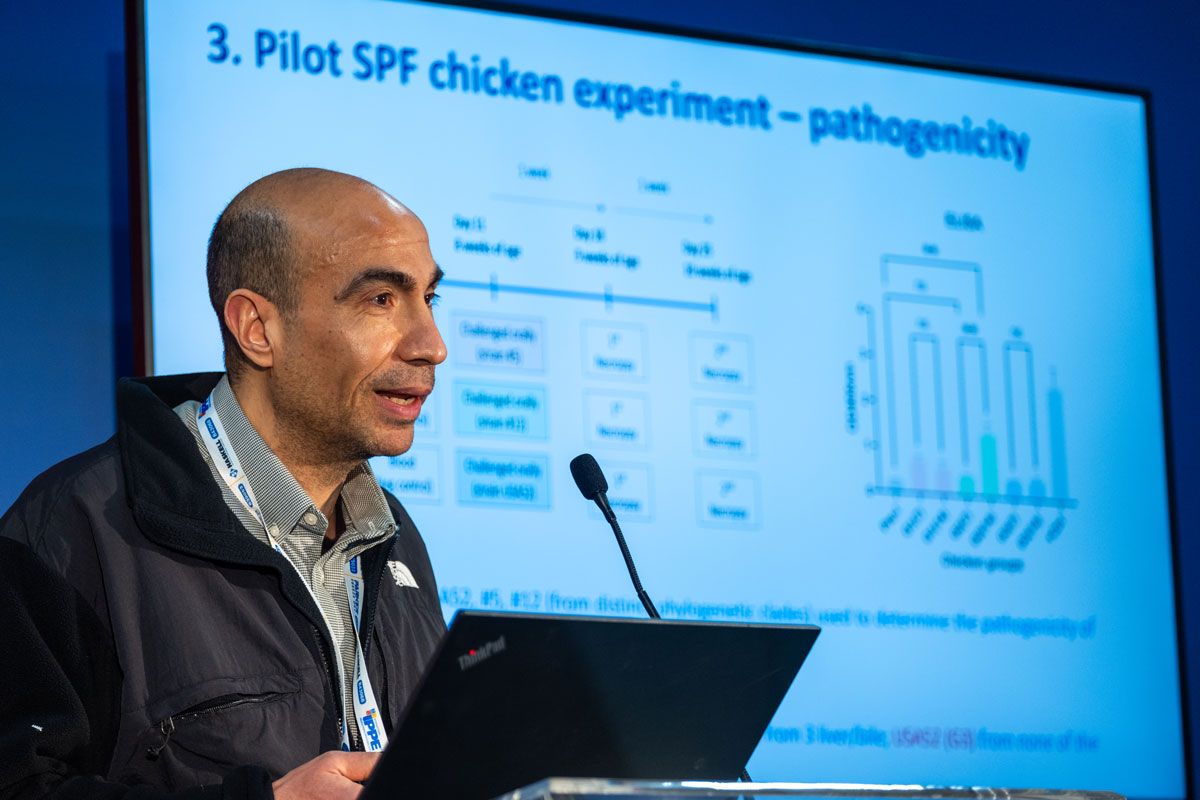
Photo caption: Dr. Orhan Sahin, associate professor in the Veterinary Diagnostic Laboratory at Iowa State University, presenting research findings during his TECHTalk session at the 2026 IPPE. Photo courtesy of U.S. Poultry & Egg Association.